


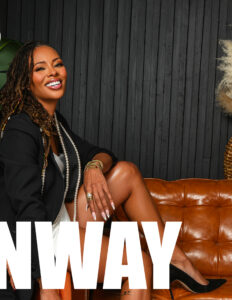



In an industry long defined by visibility over viability, “Beyond The Runway” arrives as a necessary disruption—one that reframes fashion not as performance, but as power. What once lived exclusively on catwalks and in campaign imagery is now being reexamined through a sharper lens—one that prioritizes who owns the outcome, not just who creates the moment.
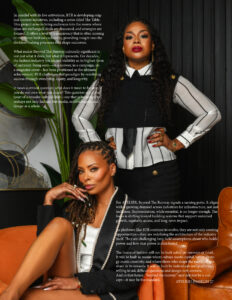
Led by supermodel and media personality Eva Marcille and investor-strategist Dr. Jatali Bellanton, Beyond The Runway (BTR) is not a traditional fashion initiative. It is a global platform engineered to close the gap between creative talent and financial ownership—a gap that has historically left many of fashion’s most influential contributors without equity in the culture they help build. In an industry where image has long been currency, BTR introduces a more enduring metric: infrastructure.
At its core, BTR challenges one of the fashion industry’s most persistent imbalances: the disconnect between those who generate cultural value and those who ultimately capture economic value. For decades, trends have been born from the innovation of underrepresented communities, only to be commercialized elsewhere, often without credit or compensation that reflects their true impact. Beyond The Runway disrupts this pattern by positioning finance as an essential extension of creativity rather than a separate, inaccessible domain.
The platform’s message is both direct and urgent—there is no sustainable future for fashion without financial literacy, access to capital, and ownership. This philosophy marks a critical shift. BTR does not simply celebrate talent or amplify visibility; it equips creatives with the tools, language, and connections necessary to build, scale, and sustain their own ventures. It reframes the designer not just as an artist, but as an entrepreneur; the stylist not just as a tastemaker, but as a brand builder.
Rather than existing as a singular event or moment, Beyond The Runway operates as a multi-layered ecosystem, activating across global fashion capitals and culturally significant cities. During key industry moments such as fashion weeks, the platform convenes designers, models, executives, and investors in spaces that extend far beyond traditional panel conversations. These are intentional rooms—designed not for spectacle, but for strategy.
Within these convenings, discussions center on the mechanics of growth: how to fund and scale fashion brands, how to structure equity and ownership, how to approach long-term wealth creation, and how sustainability intersects with business development. These conversations are grounded in real-world application, offering insight that can be immediately translated into action. They are not theoretical exercises; they are blueprints.
And increasingly, they are drawing in decision-makers—individuals with the capital, influence, and networks to turn ideas into reality. This shift is significant. It signals that the conversation around fashion is expanding to include those who shape markets, not just those who interpret trends. In doing so, BTR is redefining what it means to participate in the fashion industry at the highest level.
The platform’s expansion into Atlanta underscores a deliberate and strategic choice. Atlanta is not just a backdrop—it is a cultural engine. As a city where Black entrepreneurship, entertainment, and innovation intersect, it represents the kind of environment where Beyond The Runway’s mission can take root and grow with intention.
Recent activations in Atlanta brought together influential voices including Kandi Burruss and Tocarra Jones, creating a dynamic intersection of entertainment, business, and education. These gatherings are designed to feel less like traditional industry events and more like ecosystems—spaces where knowledge is exchanged, relationships are built, and opportunities are created in real time.
The focus remains consistent: ownership, access, and economic empowerment.
Within this context, BTR begins to feel less like an event series and more like infrastructure—a framework that supports long-term growth rather than short-term visibility. It reflects an understanding that culture does not exist in isolation; it is shaped by systems, and those systems determine who benefits.
The strength of Beyond The Runway lies in the synergy between its founders. Eva Marcille brings decades of cultural credibility, industry access, and narrative influence, having navigated the highest levels of fashion and media. Dr. Jatali Bellanton brings financial expertise, investment strategy, and a deep understanding of capital markets. Together, they bridge two worlds that have historically operated in silos.
This partnership allows BTR to do something rare: translate cultural relevance into tangible economic opportunity. It connects creatives directly with the financial frameworks that can sustain their work, removing barriers that have long limited access. In doing so, it challenges the notion that creatives must rely solely on external validation or gatekeepers to succeed.
Beyond The Runway’s ambitions extend far beyond the United States. The platform is actively building a global footprint, with activations planned across key cultural and economic hubs, including New York City, Paris, Lagos, and Davos. Each location represents a different dimension of the global ecosystem—from legacy luxury markets to emerging creative economies and policy-driven financial spaces.
This global strategy reflects a nuanced understanding of fashion as a worldwide industry that operates across multiple contexts. It acknowledges that innovation is not confined to traditional capitals and that opportunity can—and should—be distributed more equitably across regions.
In parallel with its live activations, BTR is developing original content initiatives, including a series titled The Table. This project aims to bring audiences into the rooms where ideas are exchanged, deals are discussed, and strategies are formed. It offers a level of transparency that is often missing in industries built on exclusivity, providing insight into the decision-making processes that shape outcomes.
What makes Beyond The Runway culturally significant is not just what it does, but what it represents. For decades, the fashion industry has treated visibility as its highest form of currency. Being seen—on a runway, in a campaign, on a magazine cover—has been positioned as the ultimate achievement. BTR challenges that paradigm by redefining success through ownership, equity, and longevity.
It raises a critical question: what does it mean to be seen, if you do not own what you create? This question sits at the heart of a broader cultural shift—one that is beginning to reshape not only fashion, but media, entertainment, and design as a whole.
For ATELIER, Beyond The Runway signals a turning point. It aligns with a growing demand across industries for infrastructure, not just inclusion. Representation, while essential, is no longer enough. The focus is shifting toward building systems that support sustained growth, equitable access, and long-term impact.
As platforms like BTR continue to evolve, they are not only creating opportunities—they are redefining the architecture of the industry itself. They are challenging long-held assumptions about who holds power and how that power is distributed.
The future of fashion will not be built solely on runways or retail. It will be built in rooms where culture meets capital, where strategy meets creativity, and where those who shape the narrative also share in its rewards. It will be built by individuals and platforms willing to ask difficult questions and design new answers.
And in that future, “beyond the runway” may not just be a concept—it may be the standard.
Editorial Contributor(s): Bentley Didier; Freda Hendley; Nathan Pearcy; Felipe G; Sir Von Childs

