
ATELIER | FASHION
With Humberto Leon taking the creative reins at St. John, one of American fashion’s most recognizable heritage houses is confronting a question facing luxury everywhere: How do you invite a new generation in without abandoning the women who made the brand matter?
St. John is entering a new chapter—and it has chosen a creative leader whose career has rarely been about standing still.
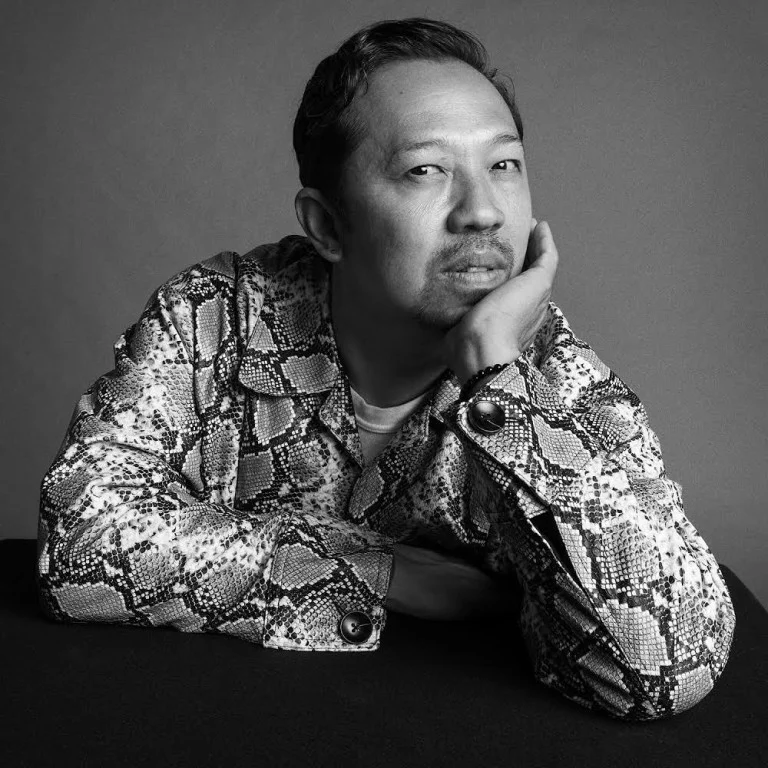
Humberto Leon has been appointed creative director of the Southern California fashion house, assuming responsibility for its design, image and overall creative direction. For a label approaching 65 years of history, the appointment is more than a personnel change. It is a statement about what American heritage luxury might look like when its archive becomes a starting point rather than a set of restrictions.
A California Conversation
The pairing makes particular sense geographically and culturally. St. John was born in Southern California and built its identity around refined knitwear, polish and a distinctly American understanding of luxury. Leon, meanwhile, has spent his career moving between fashion, art, food, film and community while maintaining deep ties to California.
He co-founded Opening Ceremony and later spent eight years as joint creative director of Kenzo, where he and Carol Lim helped bring a new generation into conversation with an established Paris house. At St. John, Leon is again confronting the creative tension between recognition and reinvention.
The house says he is drawing from its archives while giving new expression to signatures including knitwear, sport and jewelry. The revival even extends to St. John’s visual identity: a version of the outlined block logo first used in the 1970s has returned under Leon.
Heritage Without the Museum Glass
Fashion has become increasingly obsessed with its own history. Archives are mined for handbags, logos are resurrected and past collections circulate endlessly across social media. But nostalgia alone cannot build a future.
Leon’s arrival at St. John offers a more interesting proposition: heritage as raw material.
His first Fall 2026 capsule reworks archival motifs, including florals and animal prints associated with founder Marie Gray, while archival jewelry from the 1980s and 1990s informs new hardware and select original pieces return. The campaign stars longtime St. John admirer Ms. Tina Knowles, connecting the house’s history with a woman whose own public identity speaks to style, entrepreneurship and generational influence.
That choice matters. Reinvention is most persuasive when it does not pretend the previous customer disappeared.
Who Gets Invited Into Luxury?
The larger opportunity for St. John is cultural. Heritage houses often face a difficult paradox: the loyalty that gives them longevity can also make younger consumers assume the brand belongs to someone else.
Leon’s career has repeatedly challenged those boundaries. His multidisciplinary approach has treated fashion not as an isolated industry but as part of a broader cultural ecosystem. That perspective could allow St. John to expand its audience without reducing its identity to a youth-driven makeover.
The objective should not be to make St. John younger for the sake of appearing young. It should be to make the house newly relevant while preserving the confidence, craftsmanship and ease that made women trust it in the first place.
The New Rules of American Heritage
There is also a larger question here about American luxury itself. European houses have traditionally dominated fashion’s conversations about heritage, succession and archival stewardship. St. John offers a distinctly American case study—one rooted not in centuries-old ateliers but in entrepreneurship, California, knitwear and the wardrobe of modern women.
Leon now has an opportunity to demonstrate that longevity does not require creative caution.
ATELIER asks: Can a designer known for disrupting fashion culture transform an American institution without erasing the identity that gave it longevity?
The answer will unfold collection by collection. But St. John’s decision to place its history in Humberto Leon’s hands already suggests something important: sometimes preserving a legacy means allowing someone new to challenge it.
Follow @ATELIERGlobal for continuing coverage of global fashion, culture, art and design.

