
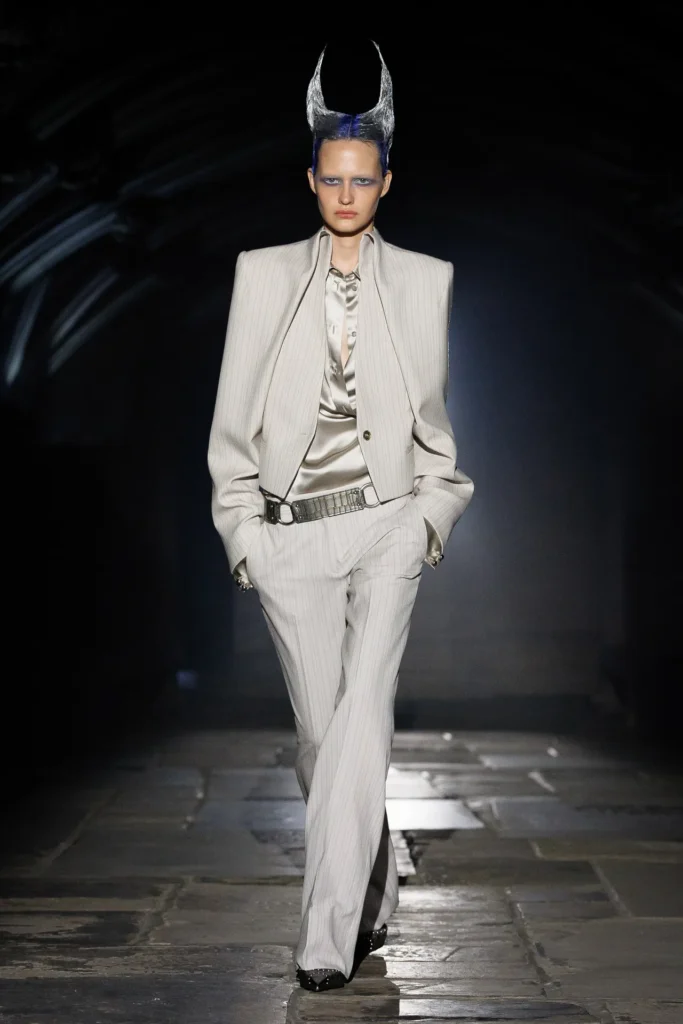
For Spring/Summer 2027, Seán McGirr brought McQueen back to London and into the Gothic undercroft of Lincoln’s Inn Chapel. But the significance of the homecoming wasn’t nostalgia. It was the realization that honoring Lee Alexander McQueen may have less to do with recreating his clothes than recovering his appetite for collision, discomfort and creative risk.
McQueen came home, and the darkness came with it.
Beneath the Gothic vaulting of the 17th-century Undercroft at Lincoln’s Inn Chapel, Seán McGirr staged a Spring/Summer 2027 collection that returned McQueen to the city where its mythology was born. The location was almost unnervingly appropriate: ancient stone underfoot, a vaulted ceiling overhead and the weight of history surrounding a house built on challenging it.
Yet this was not an exercise in resurrection.
Instead, McGirr used London to ask a more consequential question: What does it mean to inherit McQueen without attempting to become Lee McQueen?
His answer was collision.
The Sacred Meets the Rebellious
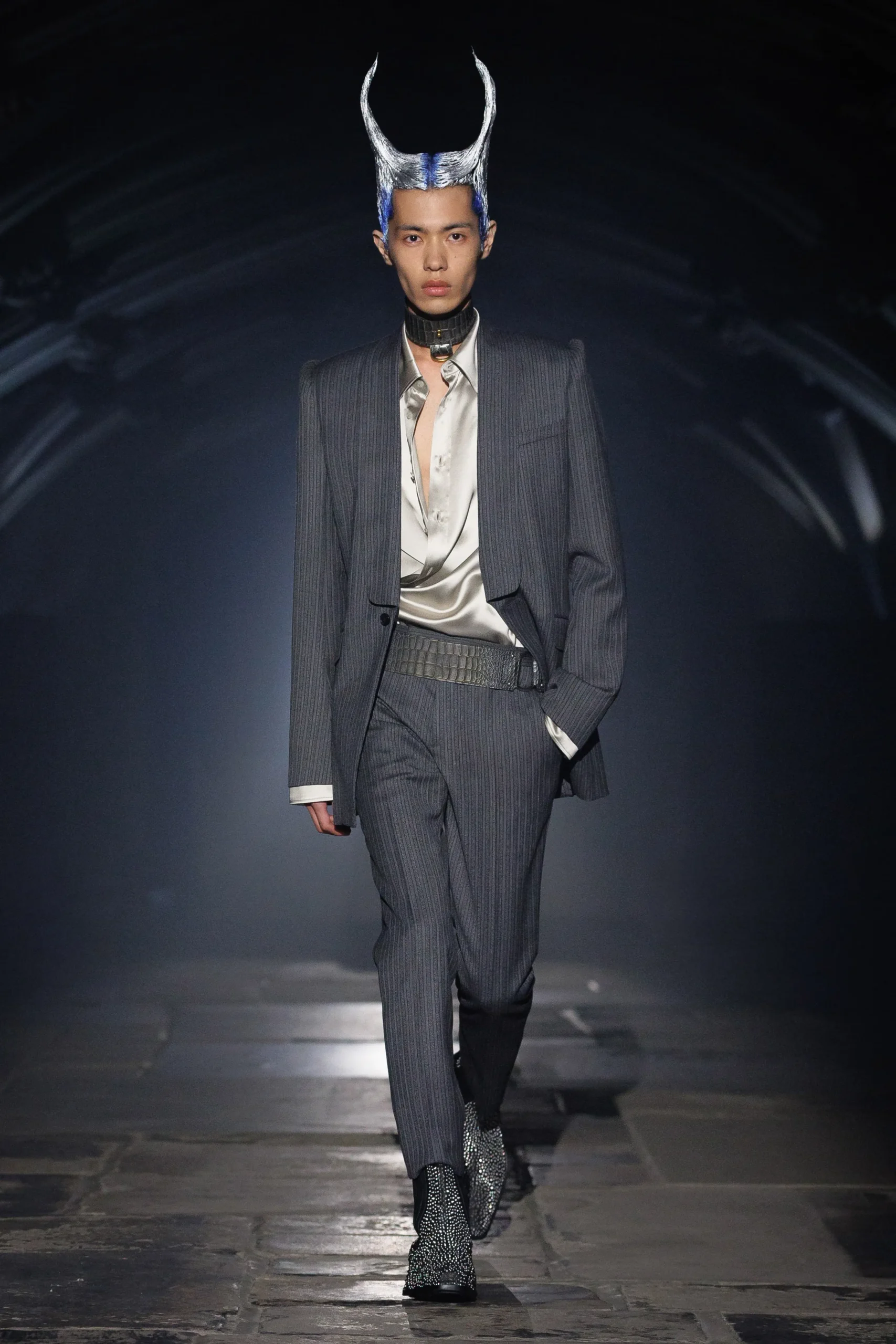
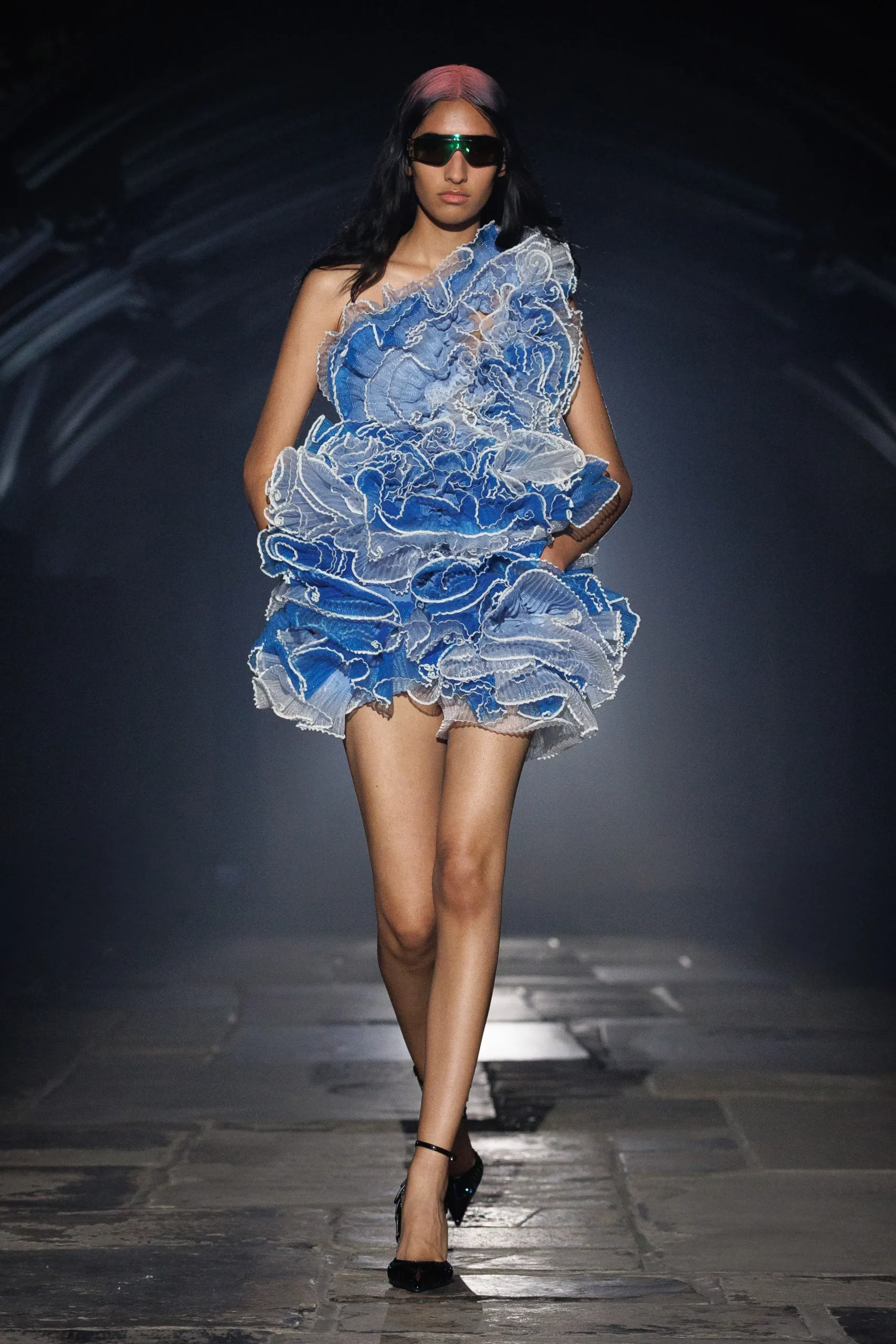
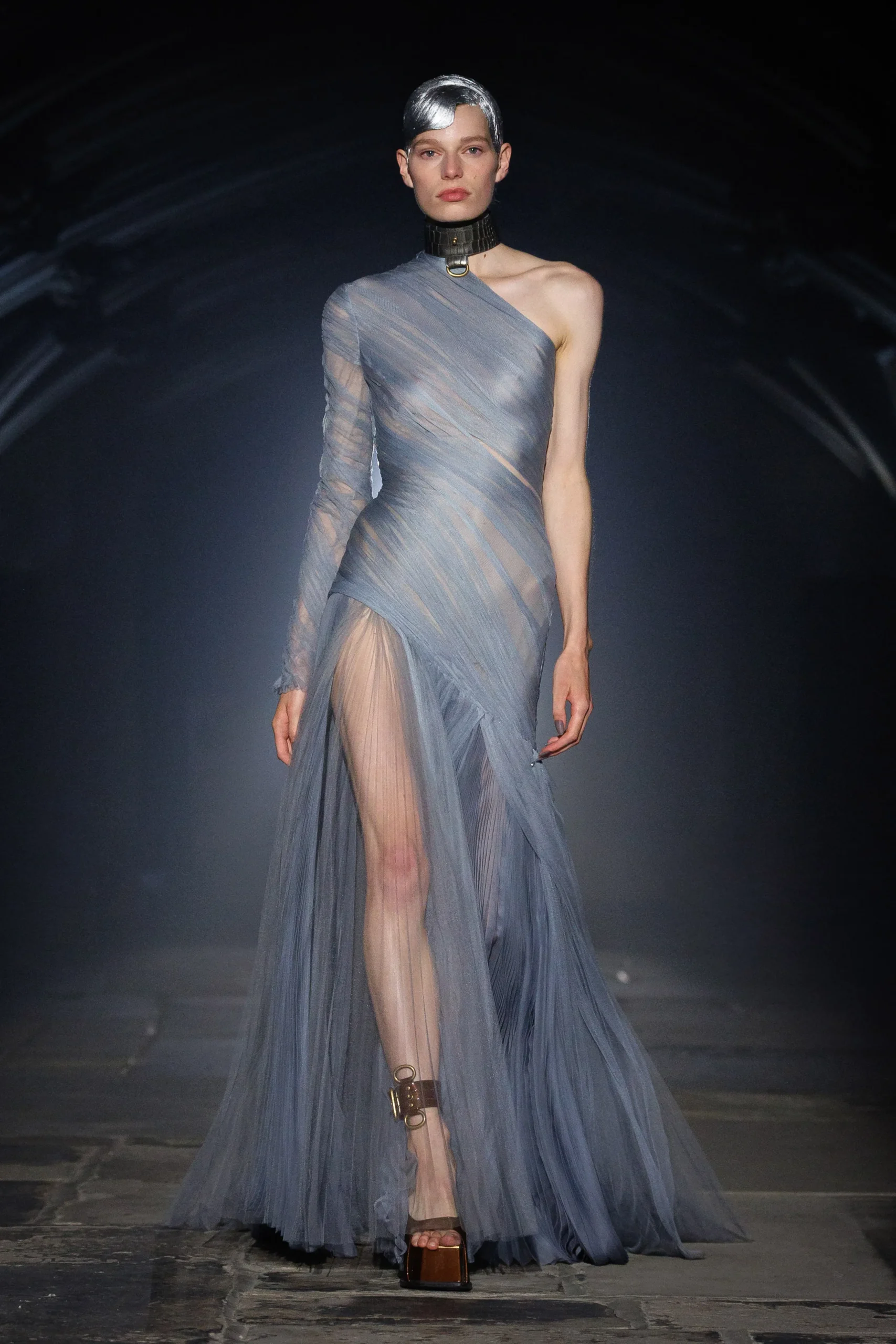
The sacred met the profane. Precision tailoring encountered rave culture. Corsetry and grand eveningwear were disrupted by leather, metallic surfaces and anarchic construction. McGirr drew together Renaissance references and the charged energy of London nightlife, allowing discipline and disorder to occupy the same collection.
That tension produced some of Spring/Summer 2027’s most memorable propositions. Tailored shoulders suggested folded wings. Corsets extended and reshaped the body. Metallic embellishment appeared across garments, while mesh, perforated leather and harder-edged pieces pulled the collection toward the nightclub. A remarkable dress assembled from individually hand-embroidered metal skulls brought beauty and mortality into the same frame.
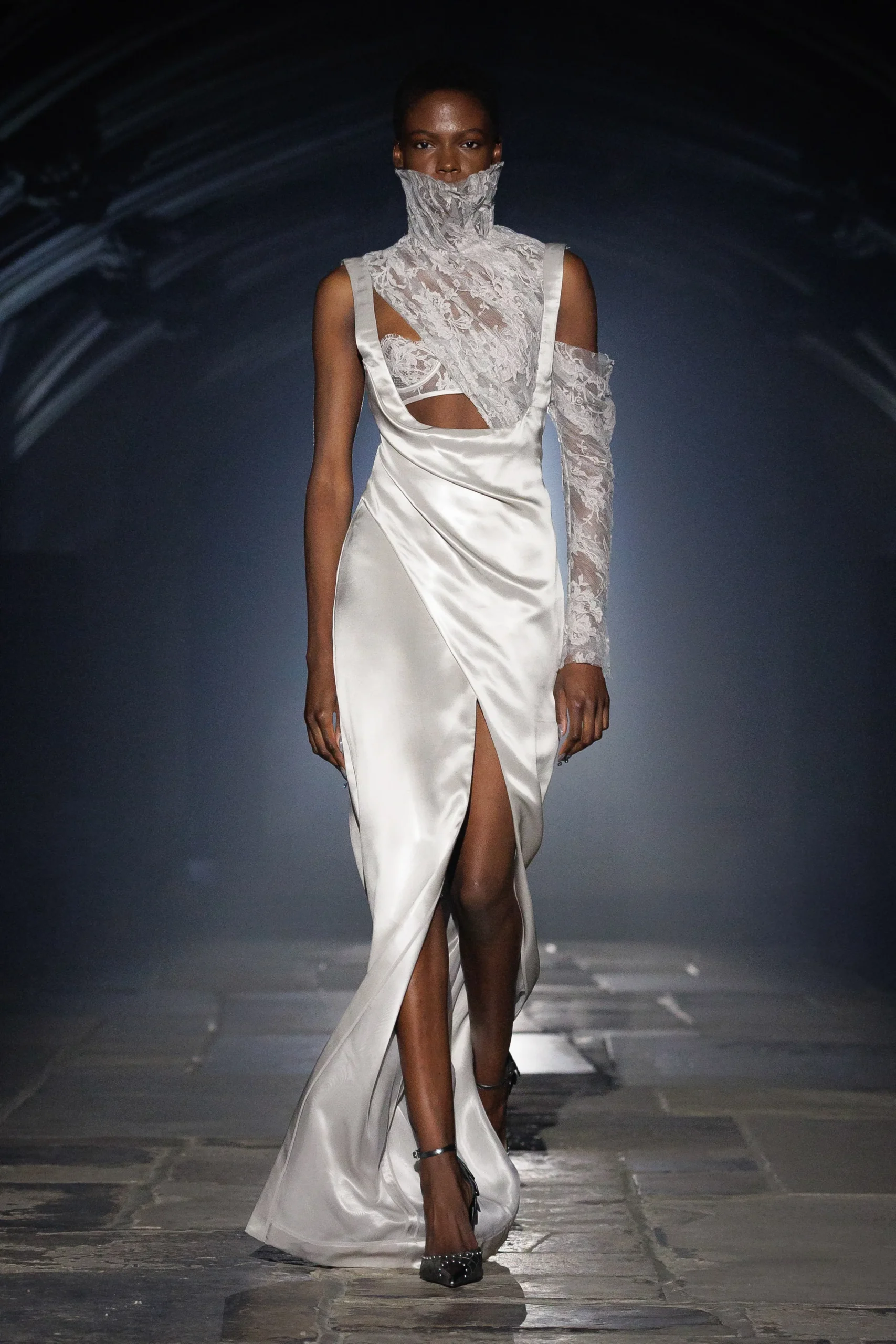
The Archive Was Present—But It Wasn’t in Control
McGirr also reconnected the house with craftspeople embedded in McQueen history. Savile Row institution Huntsman collaborated on bespoke tailoring, while jeweler Shaun Leane—whose work with Lee McQueen helped create some of fashion’s most enduring runway imagery—returned as a collaborator.
These reunions could easily have turned the collection into heritage theater.
They didn’t.
And that may be the most important thing McGirr accomplished.
McQueen Doesn’t Need Another Lee McQueen
Fashion has an uncomfortable relationship with succession. When a founder’s creative identity becomes inseparable from a house, every successor confronts an impossible assignment: change too much and the designer is accused of abandoning the codes; preserve too much and the work becomes imitation.
McQueen makes that problem particularly acute.
Lee Alexander McQueen did not leave behind merely a recognizable silhouette or archive of motifs. He left behind an attitude toward fashion itself—one built on contradiction, provocation, craftsmanship, history, sexuality, violence, romance and extraordinary technical discipline.
Trying to reproduce that literally would misunderstand the inheritance.
The clothes were never the entire point. The fearlessness was.
That is why McGirr’s London collection matters. The strongest moments did not feel like attempts to manufacture another historic McQueen spectacle. They felt like an effort to recover the permission those collections represented: permission to disturb an audience, collide references that should not coexist and allow exquisite craftsmanship to become slightly dangerous.
London Matters
Returning the runway to London functions as more than symbolism. London supplied the contradictions from which McQueen emerged: Savile Row discipline and clubland disorder, aristocracy and rebellion, historical obsession and youth culture.
Paris gave McQueen a global luxury stage.
London gave McQueen its accent.
McGirr appears to understand the difference.
ATELIER’s Perspective
The success of this homecoming should not be measured by how closely McGirr can reproduce Lee McQueen’s past. It should be measured by whether McQueen can become fearless again.
That distinction matters because fashion has become increasingly skilled at monetizing heritage. Archives are reopened. Logos return. Old bags are relaunched. Historic campaigns become mood boards for new ones.
But heritage without risk eventually becomes merchandise.
McQueen’s greatest inheritance is something considerably harder to commercialize: the willingness to make beauty uncomfortable.
McGirr’s Spring/Summer 2027 collection found flashes of that tension beneath Lincoln’s Inn Chapel—between angels and ravers, corsetry and leather, exquisite tailoring and deliberate disruption, life and the tiny metal skulls covering a dress.
McQueen came home.
But perhaps the more important development is that, for one night in London, the house stopped looking backward long enough to remember why it once terrified fashion into moving forward.

